I'm Otávio Sueitt, a Design Director with 16 years building teams and digital products. I was CDO at Zé Delivery (AB InBev), Design Director and partner at Gupy, and today I lead Growth and AI Design at Jusbrasil.
88people in the Design organization I built from scratch at Zé Delivery
6Mactive customers at Zé, up from ~1K when I joined as the first designer
8yrsleading teams, from coordinator to C-level
Where I've builtJusbrasilGupyZé DeliveryAB InBevPetloveVia Varejo
01 · About
At the intersection of design, growth and artificial intelligence.
“Design exists to enable better business decisions.”
I started as a graphic designer and became a Chief Design Officer. Along the way, I joined Zé Delivery as its first designer and grew the function to 88 people, while the product went from about a thousand to 6 million active customers across 10 Latin American countries.
At Gupy, Latin America's largest HR tech company, I was Design Director and partner: I led 33 designers, a BRL 6M budget and the unification of four products into a single platform.
Today at Jusbrasil, Brazil's largest legal tech, I lead Growth Design (Acquisition, Monetization and Platforms) with Jus IA, its AI legal assistant, at the core of the strategy. I work on pricing, packaging, experimentation and the AI infrastructure the team uses to design, audit and prototype.
I mentor on ADPList, completed Leading by Design at MIT and I'm pursuing an MBA in Product Management & Growth at FIAP.
/01
Teams from zero to scale
Structure, rituals, career paths and DesignOps for teams that grow without losing quality.
/02
Growth & monetization
Pricing, packaging, purchase journeys and metrics-driven experiments.
/03
AI applied to design
Agents, skills and design systems ready to prototype and audit with AI.
02 · Work
Selected projects and what they changed.
Jusbrasil2026 – now
designer-agent: AI infrastructure for design and product
A plugin that runs an autonomous loop: build, audit, refine and re-audit until it meets a verifiable acceptance criterion. Installed in Claude for the whole design team and adopted by PMs to spec experiments.
25design and product skills
22shared context documents
5automated audits
Generative AIDesign SystemsDesignOps
Zé Delivery · AB InBev2017 – 2023
From first designer to CDO: building Design at Zé
I built the Design organization from scratch while the product scaled to millions of customers in 10 Latin American countries, across the Zé Delivery and TaDa Delivery brands.
1→88people on the Design team
6Mactive customers
NPS 80+and 5.0 on the App Store
Design LeadershipOrg designBrand
Jusbrasil2026
Jus IA repackaging
Restructured the lawyer plans with AI in every tier, differentiated by usage volume rather than feature gating.
PricingCopyAI
Jusbrasil2026 – now
Growth organized by engines
Turning strategy into structure: growth engines, three-layer governance and LLM-automated OKR tracking.
GrowthOrg designOKRs
Jusbrasil2026
Growth Onsite: 2027+ strategy
Designed and co-facilitated an in-person week with leadership to set the growth and monetization strategy for the coming years.
StrategyFacilitation
Jusbrasil2026
Annual plan adoption program
Bets with hypothesis, kill criteria and owner, plus a data-backed decision on what not to do.
GrowthExperimentation
Jusbrasil2026 – now
Jusbrasil Confere monetization
Launch of a background-check product for consumers, with an ID lookup bundle and an upgrade journey.
MonetizationProduct Design
Jusbrasil2026
4All brand platform and Jus IA film
A consumer brand platform that produced the tagline for an out-of-home campaign, plus the script for the repositioning film.
BrandStrategy
Jusbrasil2025
Jus IA monetization strategy
Monetizing AI without cannibalizing the base: a mid-premium position, charging on output and the pivot from skills to chat mode.
−73%cost per user in chat mode
67→77%satisfaction
PricingGo-to-market
Gupy2023 – 2024
Design operations at Gupy
A Design center of excellence built on three pillars: product, service and research.
33designers
6.9→8.6engagement in 18 months
LeadershipDesignOps
Gupy2023 – 2024
Multi-product UX audit and redesign
Harmonized the experience of 4 products after two acquisitions, using an in-house audit framework.
260+issues mapped
−30%Figma detach rate
UX StrategyResearch
Gupy2024
Gupy Design System
A hybrid (centralized + federated) model for 33 designers and 88 engineers, backed by an ROI business case.
199%projected 5-year ROI
+38%design efficiency
Design SystemsROI
Gupy2023
Design Chapter
The team's purpose, vision, principles and mission, grounded in a UX maturity study.
DesignOpsCulture
Zé Delivery2018
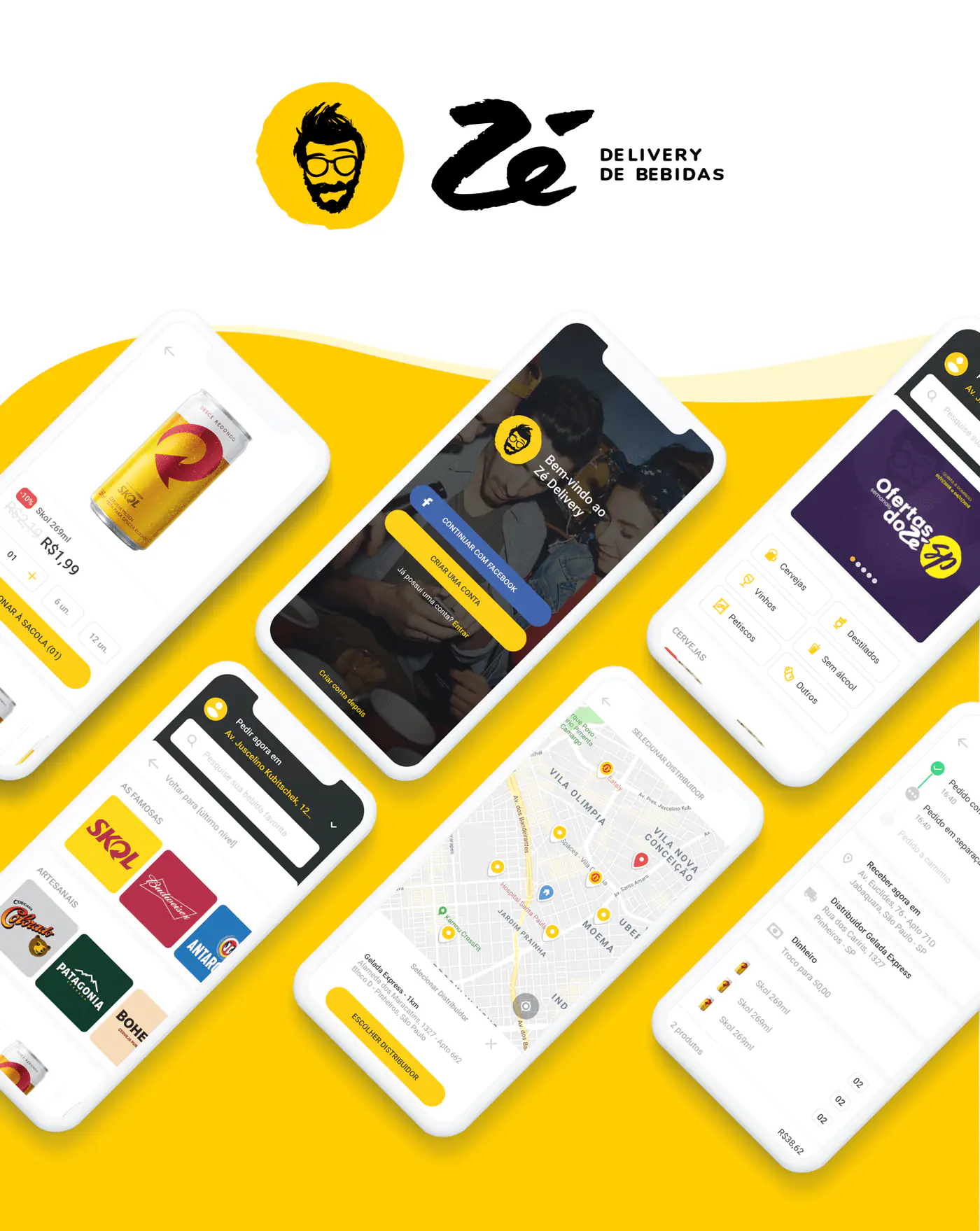
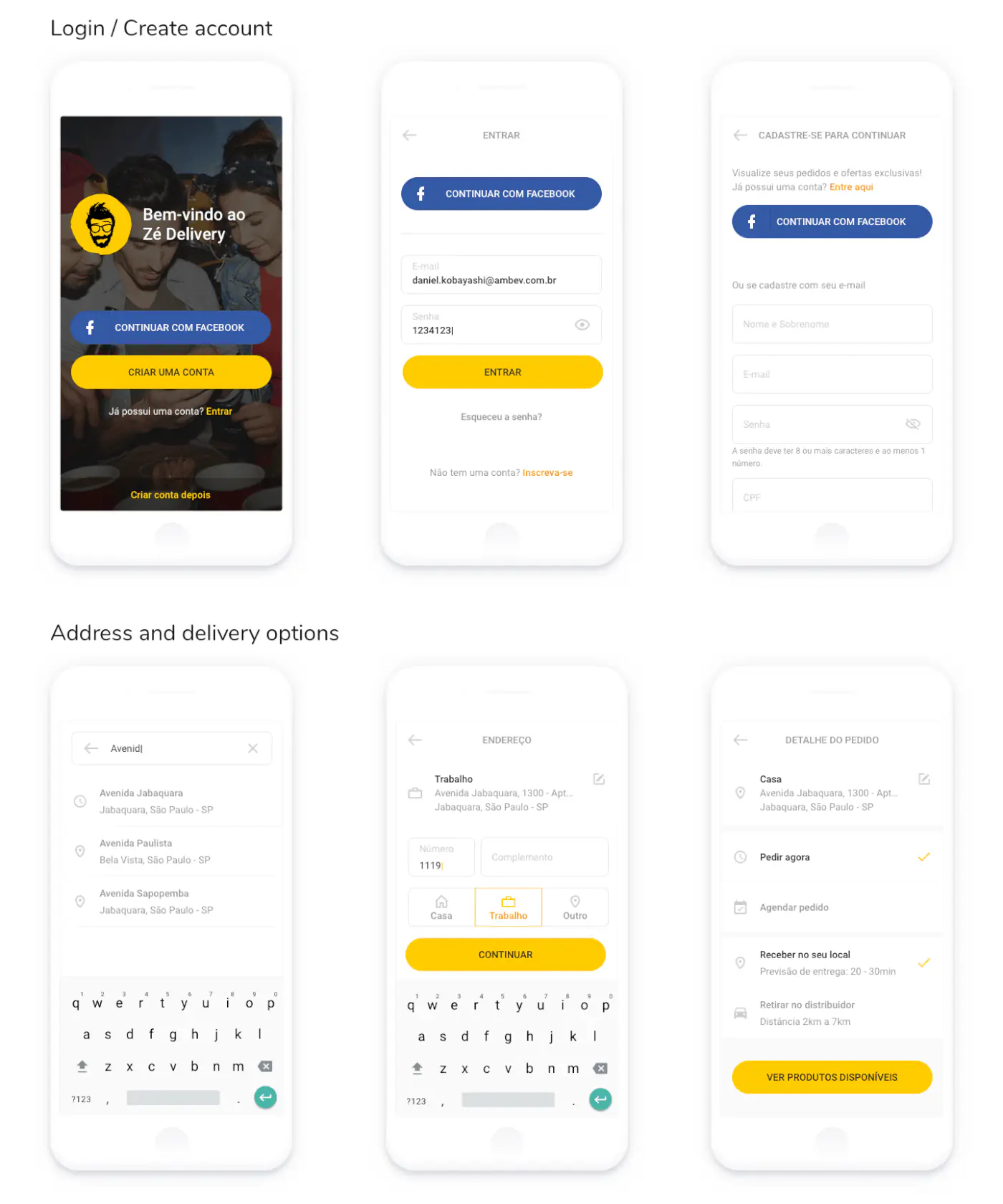
Zé app redesign (iOS and Android)
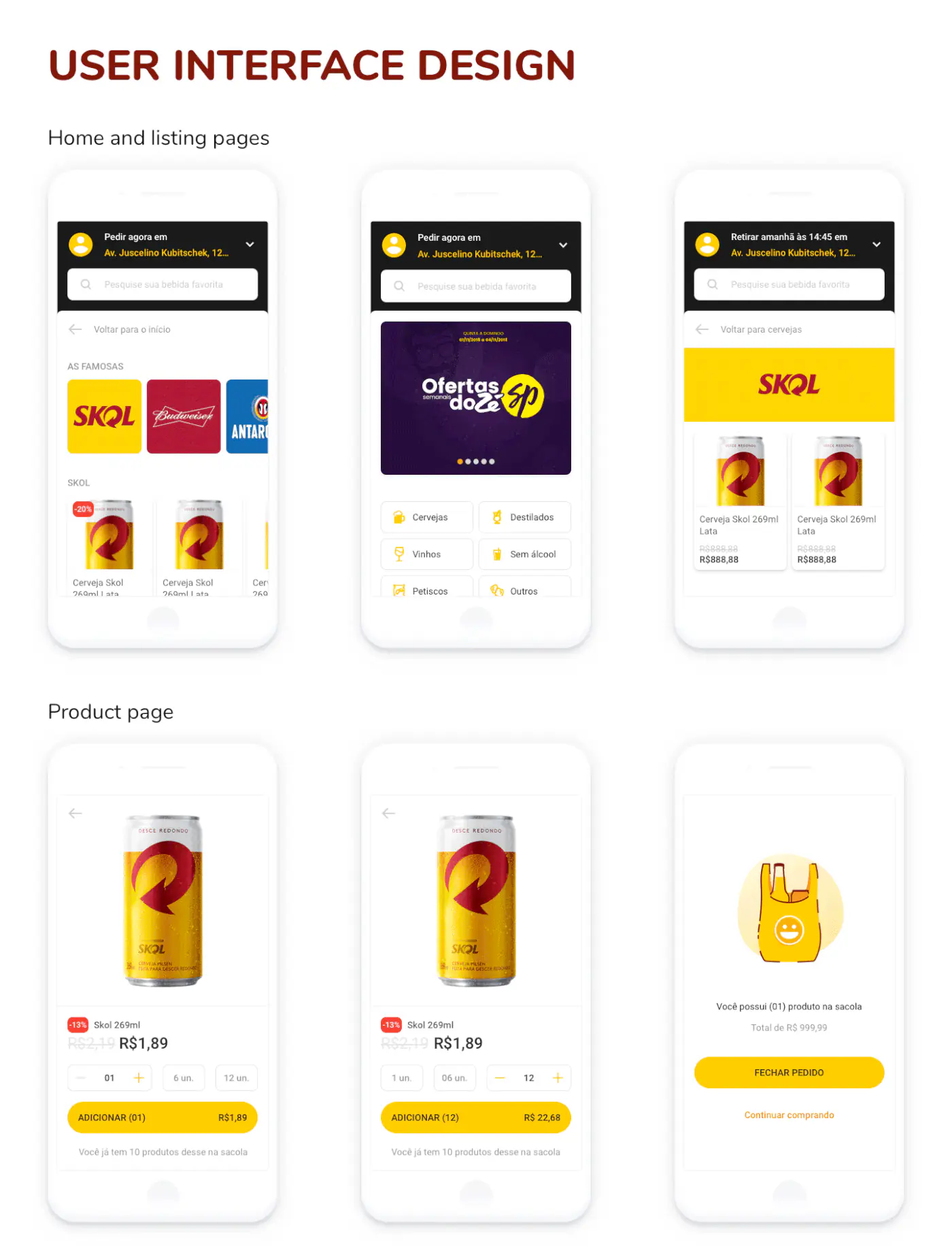
From MVP to a product ready to scale: 300+ screens, testing with 30 users and a new experience validated in beta.
2.9→4.9Play Store rating
+8 ppconversion
Product DesignResearch
Zé Delivery2018
Zé UI Kit, the Design System foundation
A unified visual language across 5+ products: consumer, courier, point of sale, back office and marketing.
Design SystemsAccessibility
Zé Delivery2019
Zé Courier app and Admin
The delivery tracking service and an admin redesign for the three pillars of operations: Growth, Operations and CX.
0 → 1B2B tools
Hands-on
Interfaces I designed
Before leading teams, I designed screens. A few product design projects published on my Behance.
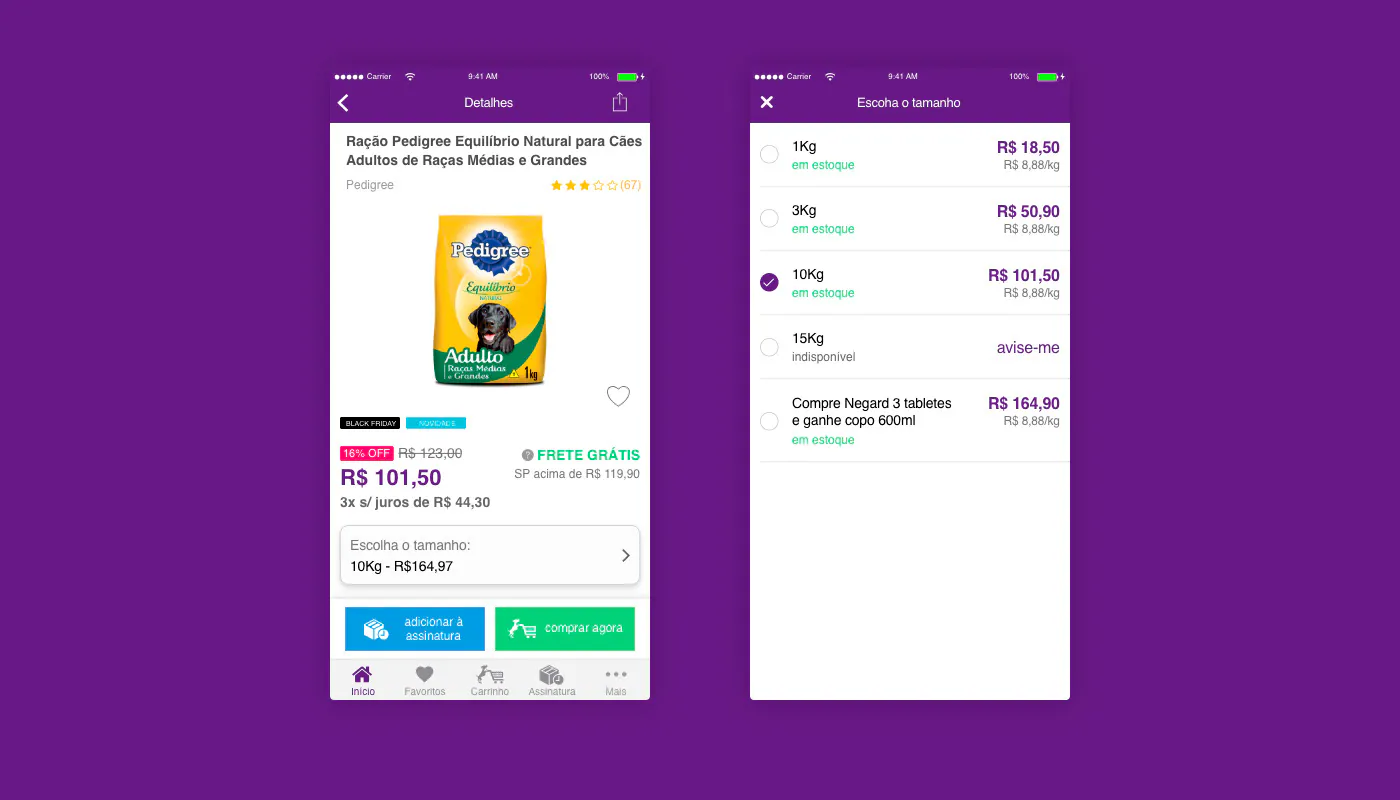
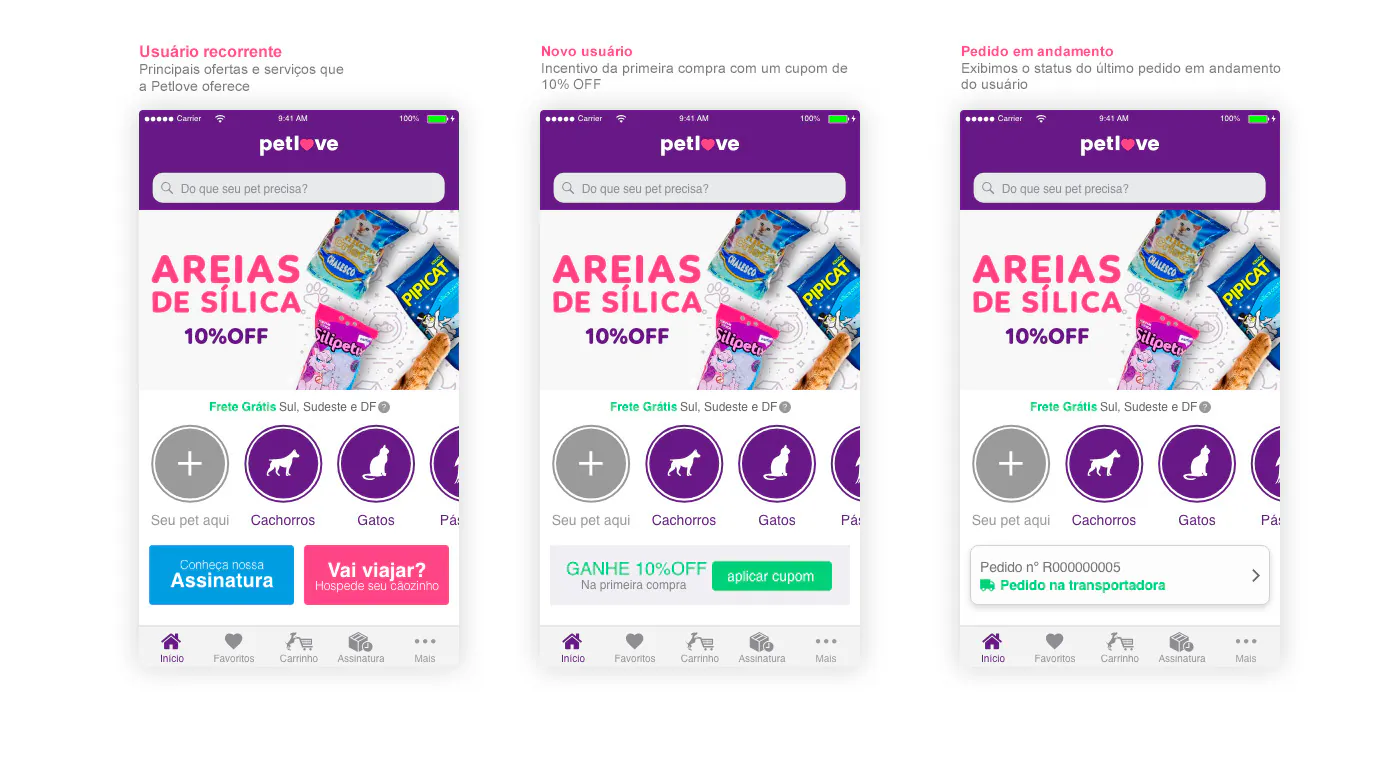
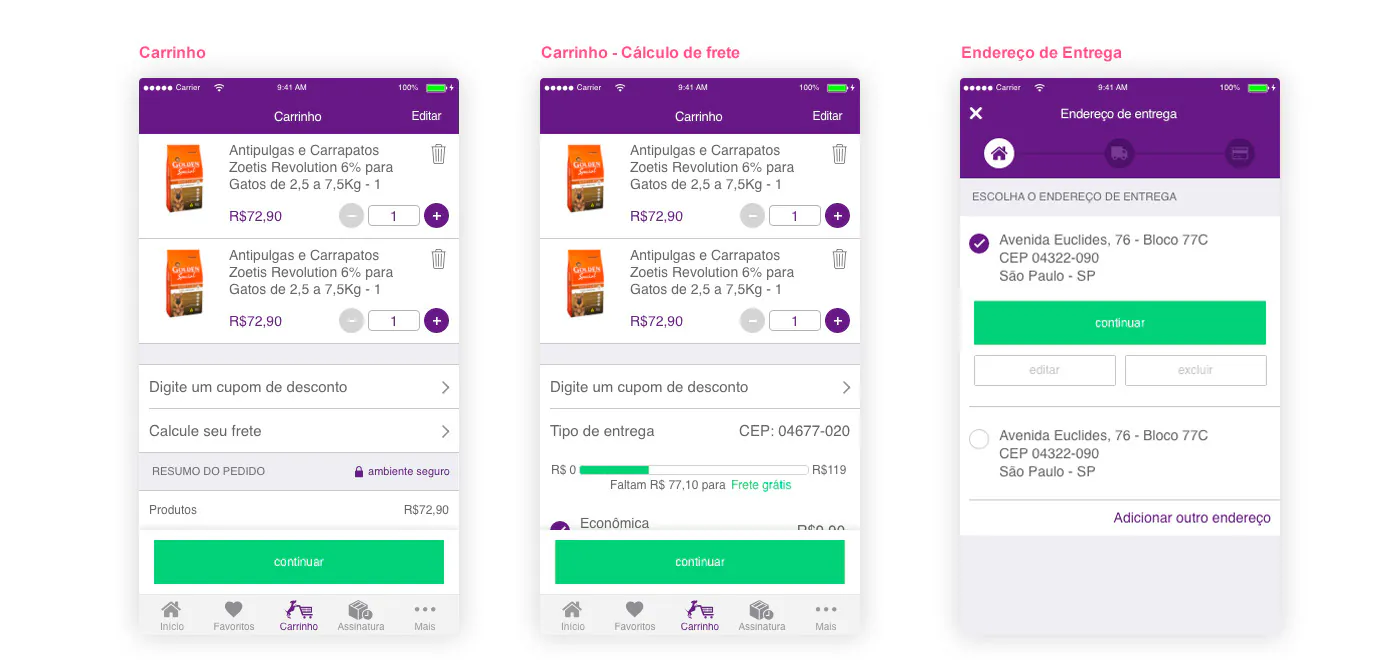
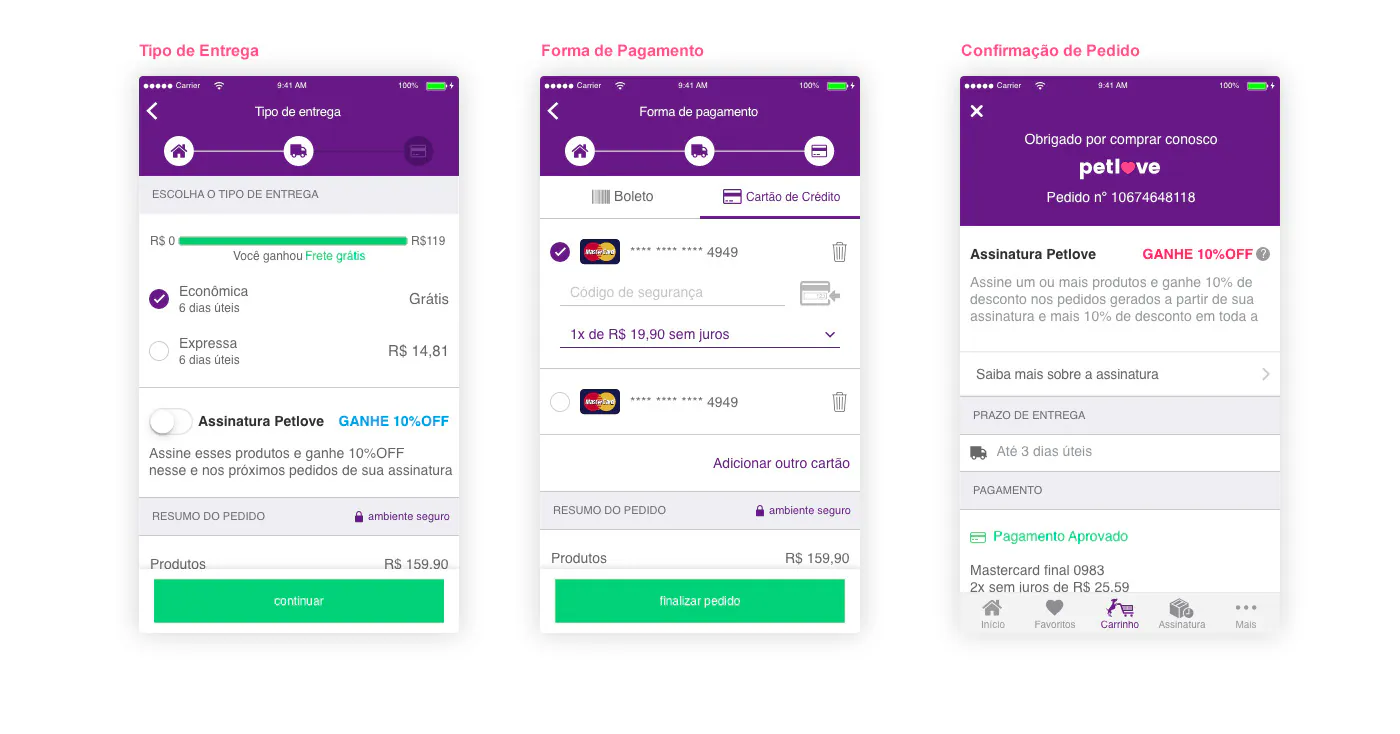
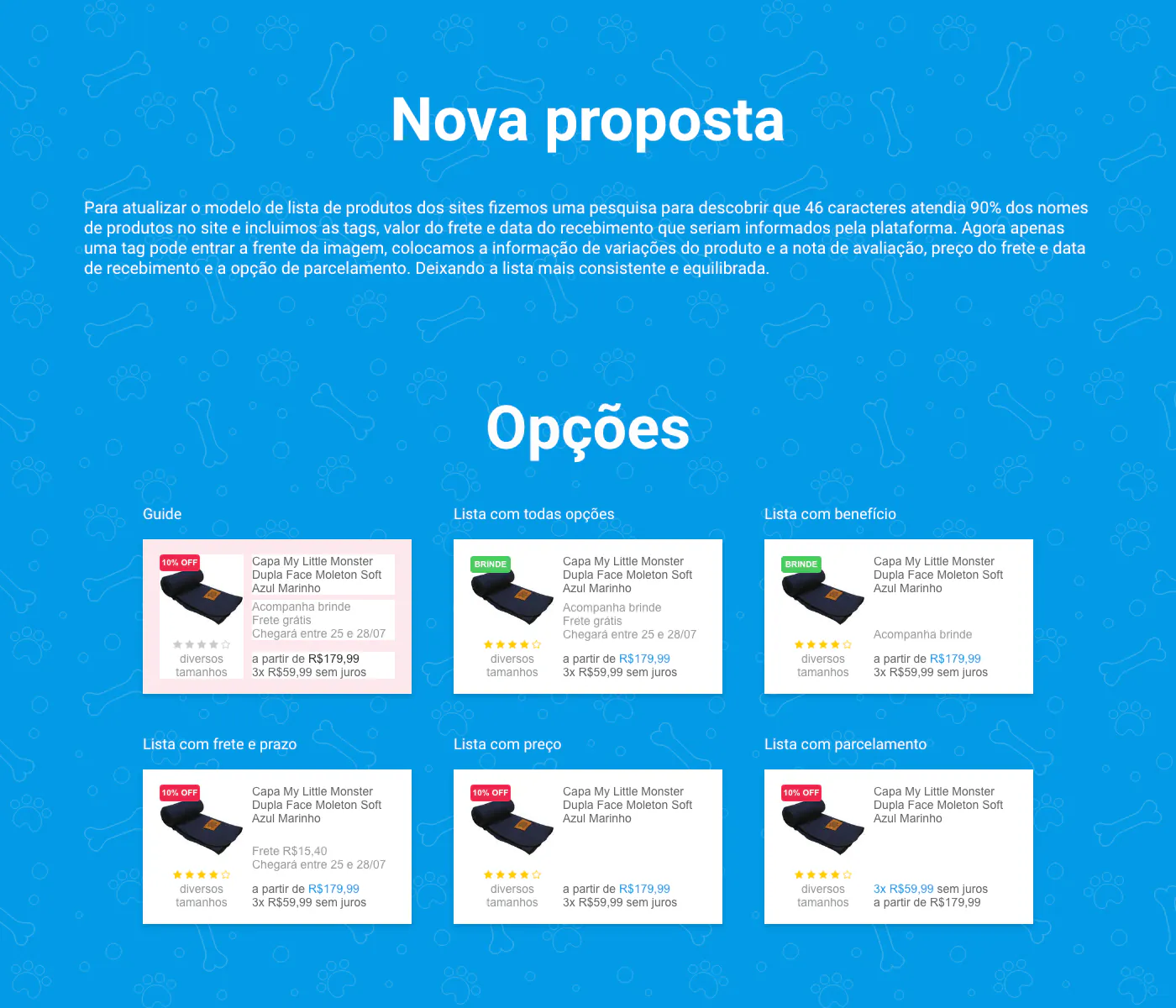
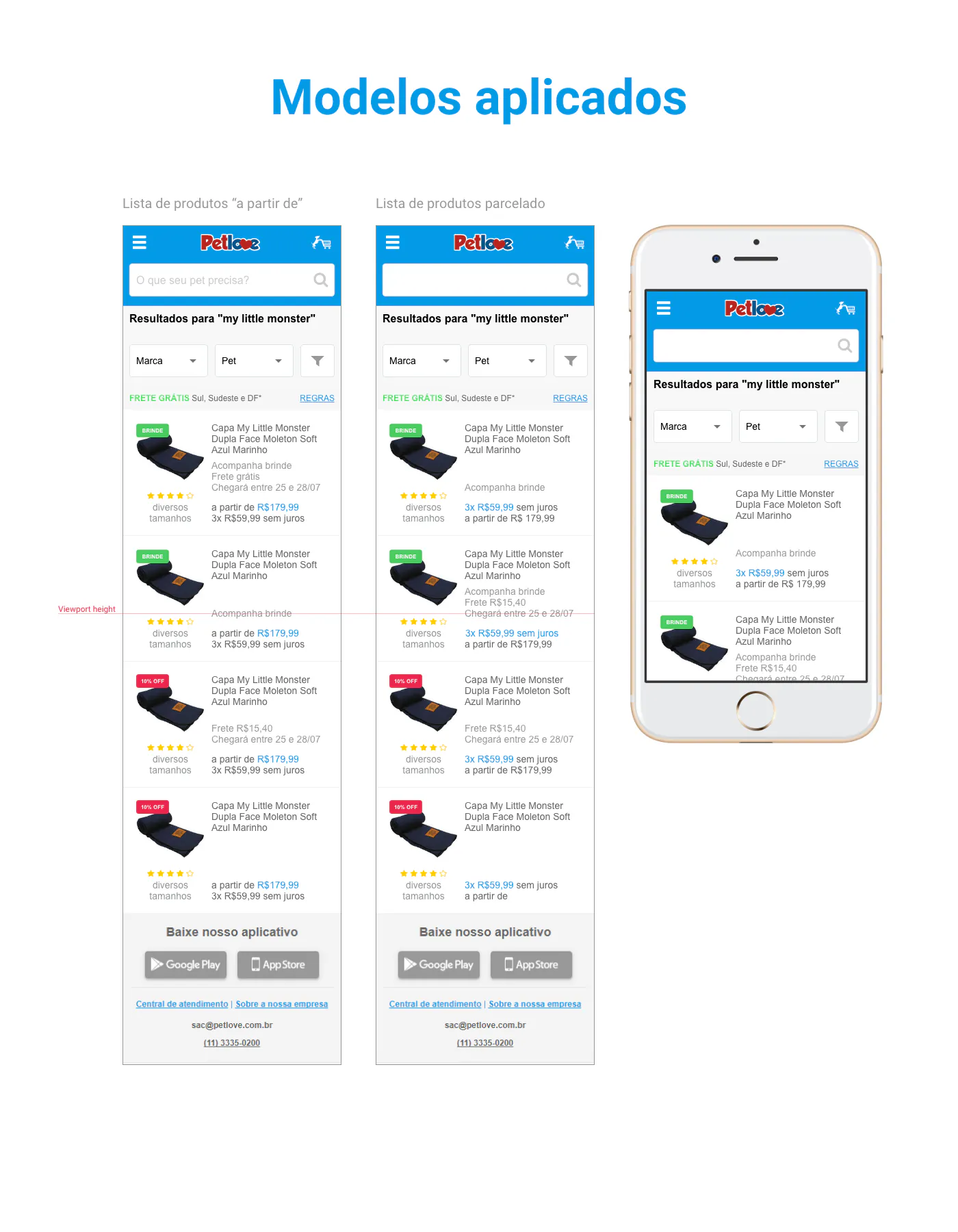
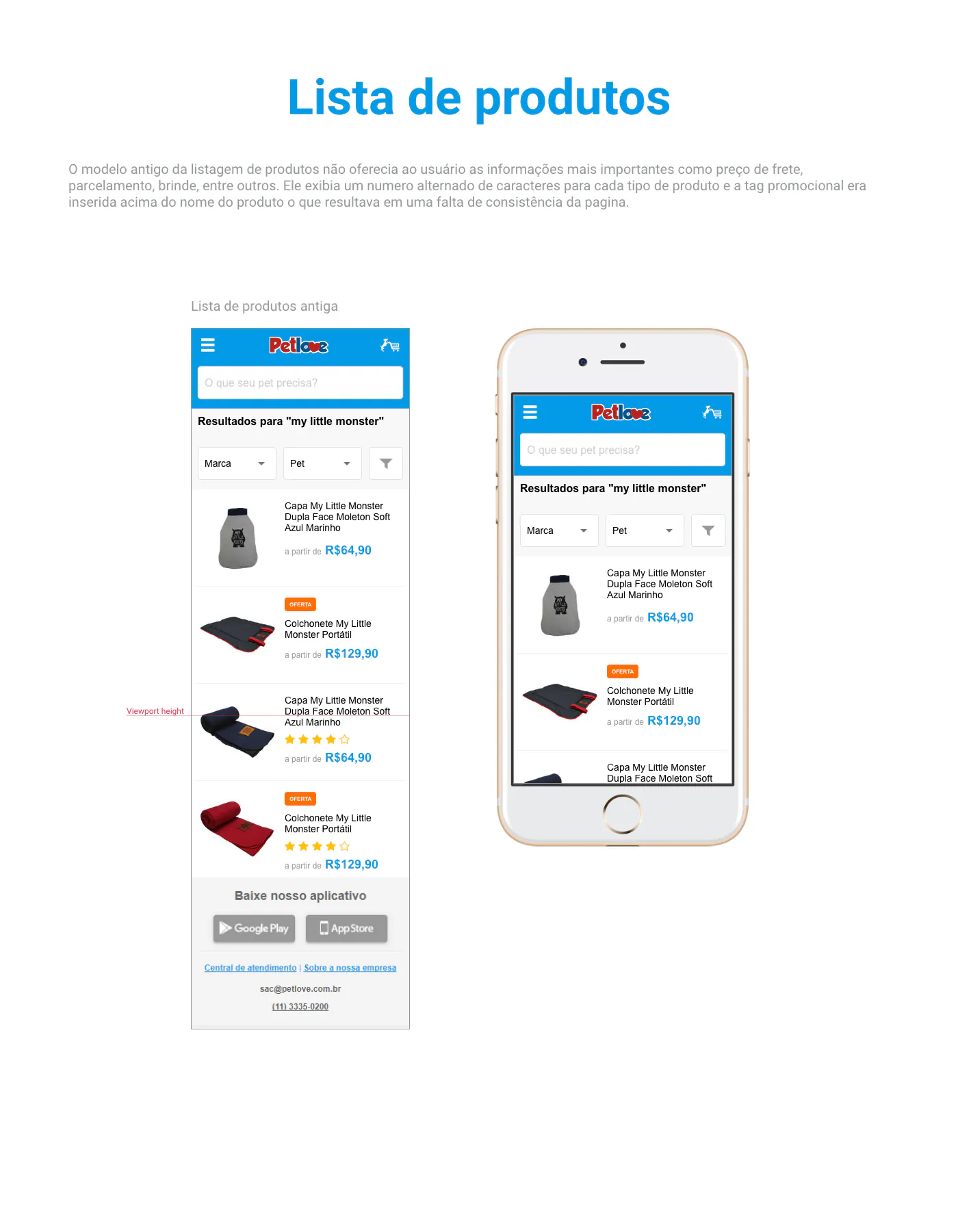
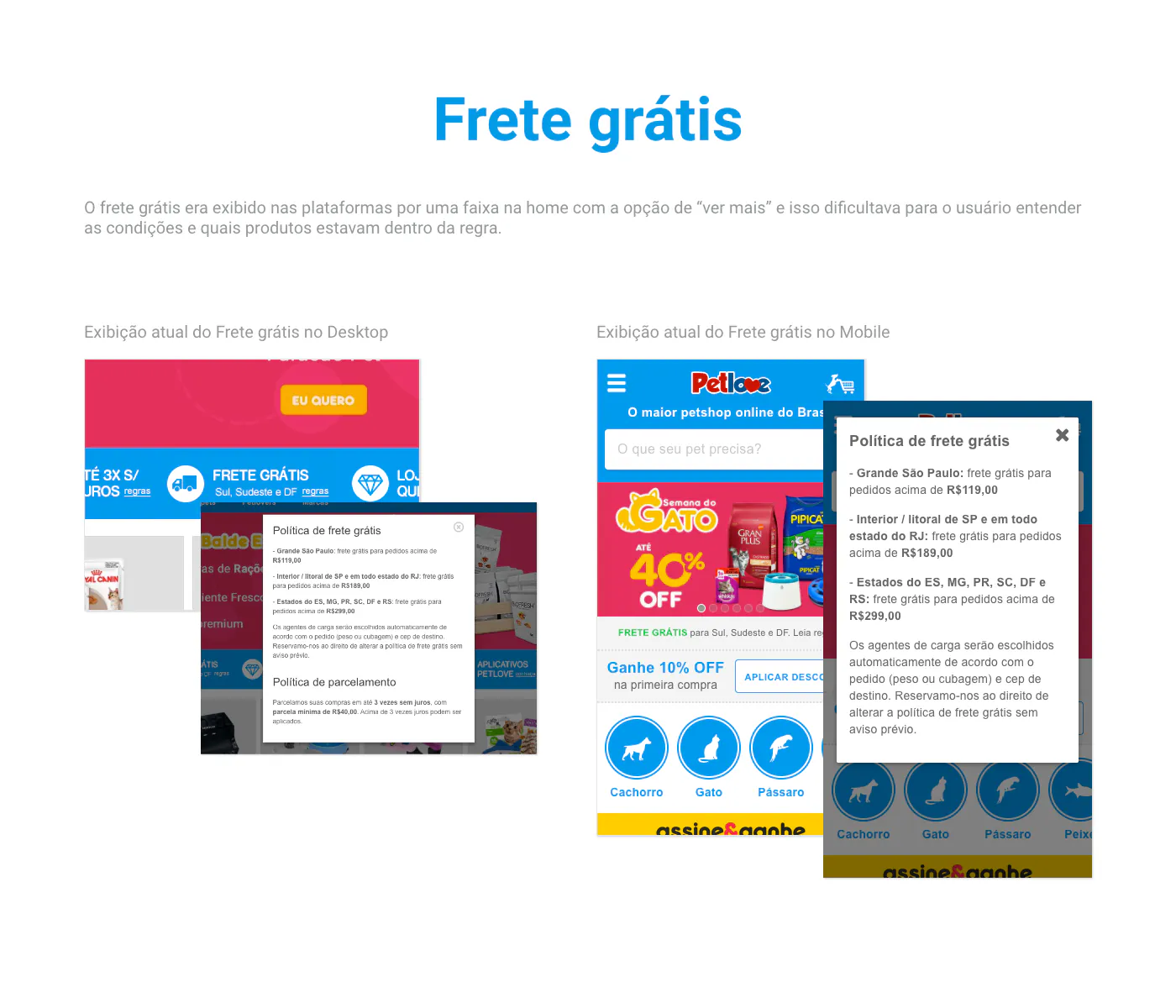
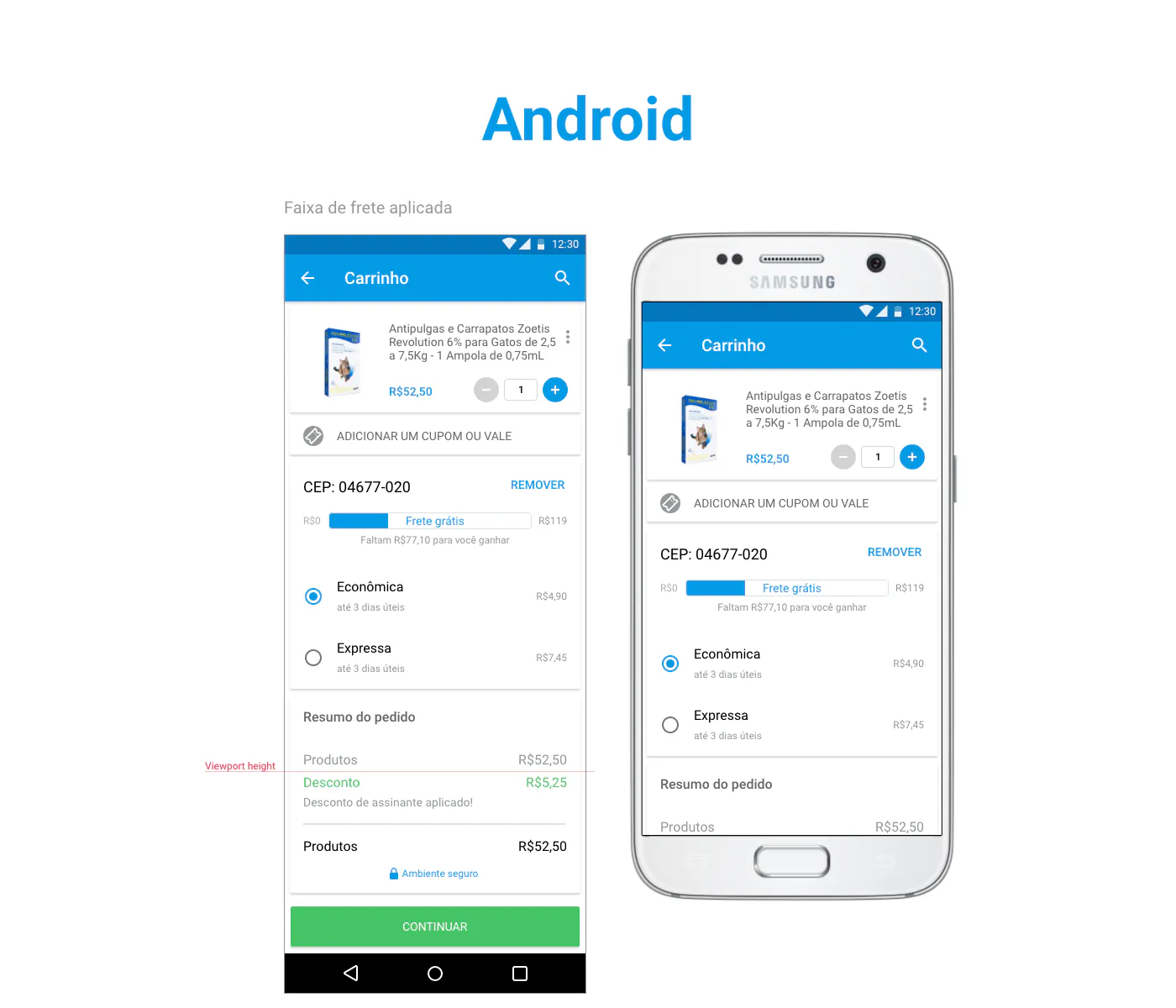
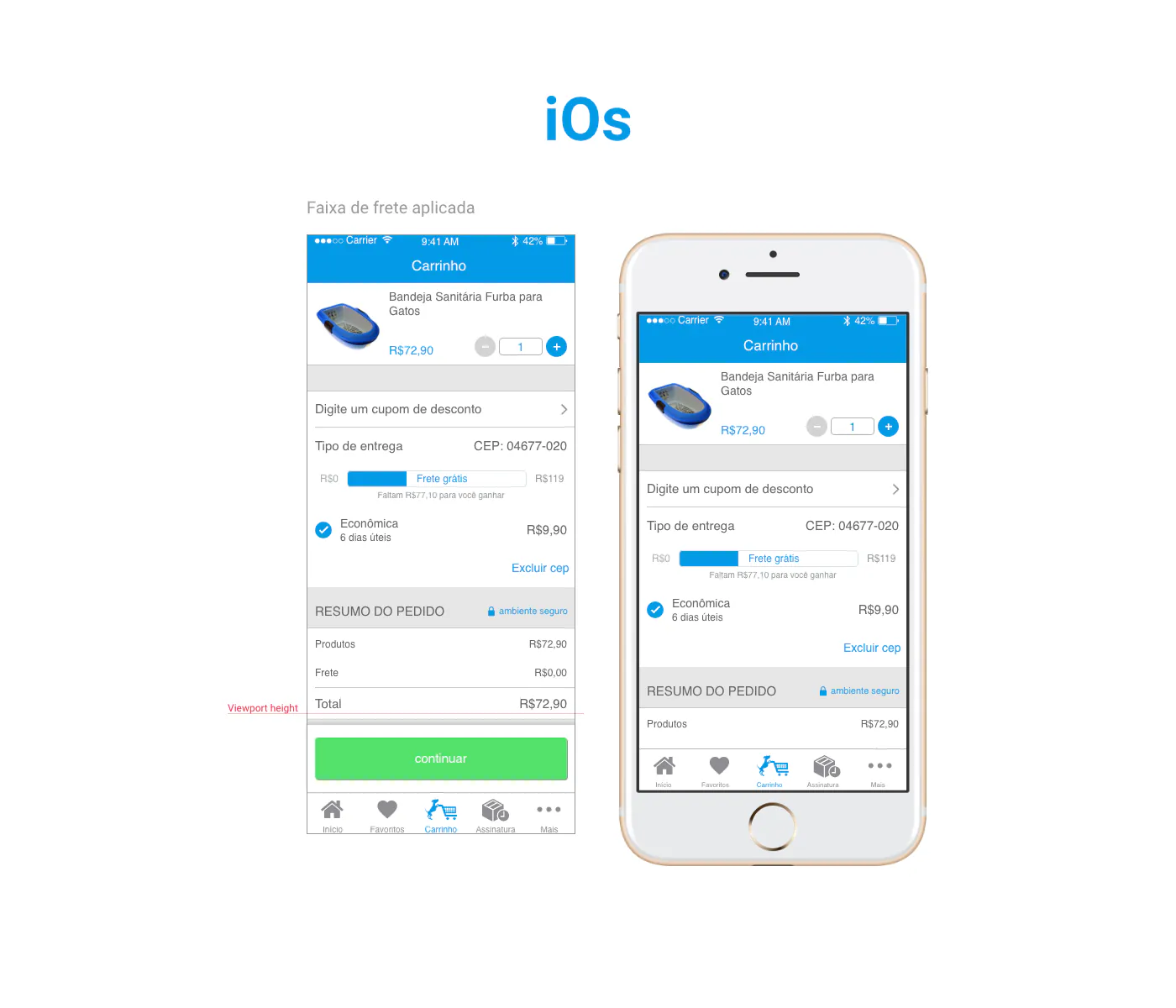
iOS and Android apps and the desktop/mobile site. Pet Profile, with over 1 million sign-ups, and a recurring-purchase subscription.
Product Designer
2014 – 2016
Via Varejo
The group's e-commerce: user research, A/B testing and checkout optimization, as 3 tech stacks and 9 products were consolidated into 1 white-label platform for 3 brands.
Web Designer
03 · How I lead
Frameworks I created to help teams scale.
Large design teams don't scale on heroics; they scale on systems. These are some of the models I designed and rolled out with my teams at Zé Delivery, Gupy and Jusbrasil, adapted here without internal data.
I also documented
Playbooks for accessible handoff (WCAG 2.2), product metrics structure, semester discovery management, stakeholder communication routines, product and design discovery templates, and design career ladders.
Open source
AI skills for experimentation
I opened up the first two stages of my experimentation framework as skills anyone can use, with any LLM: ChatGPT, Gemini, Claude or another. They guide the conversation in short rounds, reply in the language you write in and never invent data. The GitHub page has step-by-step setup for each tool.
Turns a loose idea into a testable, falsifiable hypothesis in 9 blocks, from evidence to the decision table, and lists everything still missing before prioritization.
Turns the hypothesis into an executable plan: variants, metrics, sample size with the math shown, rollout, stop criteria and decision rules set before launch.
Use it, adapt it and contribute. Found a way to make it better? Open an issue or send a pull request. MIT License.
04 · Experience
Sixteen years, from graphic designer to C-level.
2024 – now
Jusbrasil
Brazil's largest legal tech · Remote
Revenue & monetization
Senior Design Manager, AI & GrowthDec 2024
Design at the center of the growth strategy: pricing, packaging and experimentation for Jus IA, the AI legal assistant.
2023 – 2024
Gupy
Latin America's largest HR tech
Brand reputation
Design Director & PartnerFeb 2023 – Oct 2024
The candidate experience drew public complaints on social media. Improving it became a brand reputation priority, not just a product one.
2017 – 2023
Zé Delivery · AB InBev
Beverage delivery · 10 countries
Competitive differentiation
Chief Design Officer & Partner2021 – 2023
Product Design Director, D2C LATAM (AB InBev)2021 – 2023
Design Director2019 – 2021
Product Design Manager2019
Product Design Coordinator2018 – 2019
Senior Product Designer2017 – 2018
A focus on service and operations, not just the product, built a tough environment for competitors: the world's largest beverage delivery service, rated 4.9–5.0 in the app stores and 4.6 on average for orders.
2011 – 2017
Early career
Petlove · Via Varejo · TomTom · Teatro Alfa
Product Designer · PetloveBetter experience · pet onboarding and product recommendations; over 1 million sign-ups2016 – 2017
Web Designer · Via VarejoCost savings · from 3 tech stacks and 9 products to 1 white-label platform serving 3 brands2014 – 2016
Graphic Designer · TomTomInnovation · from in-car device to app, following the shift in consumer habits2012 – 2014
Design Intern · Instituto AlfaInnovation · Teatro Alfa's first website and first Facebook page, with online ticket sales2011 – 2012
2023 – now
ADPList
Mentoring designers
MentorJan 2023
05 · Education
Education
MBA, Product Management & GrowthFIAP · 2025 – in progress
Leading by DesignMIT · executive course
Postgraduate degree in Information Architecture & UXImpacta Tecnologia · 2016 – 2018
In Growth, I connected four pieces that used to live apart: data, hypothesis, screen and result reading. Business context and numbers live in one repository; screens live in designer-agent. The two talk through versioned files with fixed contracts, which people and AI agents read and write the same way.
Self-service data, the foundation
It does two jobs: it generates signal for discovery (where hypotheses come from) and it interprets the experiment after it runs. The rules that make the numbers trustworthy:
Every query starts from a documented metric, with explicit business rules and filters. No agent improvises its own query.
Every number ships with provenance: source, time window and filters applied.
Materiality before narrative: variation within historical noise is called normal, not a red flag.
Question → metric evals measure whether the AI lands on the right metric.
1 · Identify: from signal to bet
Signal comes from discoveries, a weekly idea radar and data analyses. The hypothesis is built in nine blocks:
Block
Content
Problem and evidence
The observed pain before the solution, with qualitative and quantitative data
Opportunity
Size and link to the OKR
Core
"We believe [change] for [segment] will [impact] because [evidence]"
Prediction
One primary metric and at least one guardrail
Assumptions and design
The riskiest leap of faith; test type, groups and allocation
Decision table
What to do on win, lose or inconclusive, defined before running
The hypothesis becomes an XP Plan: variants, traffic split, metrics with direction and unit, sample size (baseline + minimum detectable effect) and a ramped rollout.
Measure before designing. A measurability gate runs probes in order of cost: does the object exist? Does anyone see this surface today? Does the data reach where the metric reads it? If it can't be measured, the spec ships blocked, with the unblock request addressed to the right owner. A lesson learned the hard way: never borrow a baseline from a similar surface. In a real run, the analog was off by more than 3x and would have sized the test to end inconclusive.
2 · Build: designer-agent reads the XP Plan
Variants become what to build; the hypothesis becomes the bar the screen is judged against; guardrails become design constraints. There's a single human checkpoint. After that, the loop builds, audits and refines until it converges, stalls or hits the round limit.
The control is read from production code, not from Figma, which may be out of date.
Production defects aren't fixed in the control: they're kept and declared in the handoff.
One variable at a time between A and B.
The experiment metric isn't a loop criterion: the screen makes the result possible, and the A/B test measures conversion.
3 · Validate and 4 · Learn
Data first, reading second: sample ratio mismatch (SRM), users duplicated across variants and unexpected exposure invalidate any conclusion.
The decision follows the table agreed before running, and the analysis is recorded alongside the experiment.
Closed items aren't deleted: they feed the next hypothesis, the Experiment Review and the month's bets.
Principles
Problem before solution.
No number without provenance.
Decide before running, so results aren't rationalized afterwards.
Measurability is an entry gate, not a gap discovered at the end.
AI doesn't make product decisions: pricing, policy and ownership become gaps with an owner.
Stopping is deterministic; humans at the checkpoint, not at every step.
Context here, screens there: a prototype without business context is decoration.
With AI, generating hypotheses and plans got cheap. The challenge I'm working on now is the other side: making sure every experiment closes the loop and becomes recorded learning.
The first two stages, hypothesis and experiment plan, are open as AI skills in design-ai-infra ↗.
Framework · Zé Delivery2021
Three-level Design strategy
When the Design team grew from a handful of people to dozens, I needed a way to connect the function's vision to day-to-day work. The answer was to plan in three layers, each with its own horizon, question and owner.
How it works
Strategic: the department's vision, with a strong outward focus. Owned by Design's executive leadership.
Tactical: projects by business unit. Owned by managers.
Operational: specific tasks and goals. Owned by each designer, with their manager consulted.
The manifesto
Above the layers sits a four-part manifesto: purpose, mission, vision and dream. It gave me the line that still guides my work: Design exists to enable the best business decisions and deliver value to people.
The theoretical starting point was the Danish Design Centre's Design Ladder: moving Design from "styling" to "process" and then to "strategy".
Framework · Zé Delivery2021 – 2022
Chapter-based organization
Chapters make the strategy concrete. Each one gathers a specialty and the skill set needed to deliver the function's goals, while people stay embedded in product squads.
Product & Service Design: builds customer experiences across the ecosystem of products and services.
Creative Design: brand communication and content, shaping how messages reach customers.
Research: gathers and manages knowledge about customers.
Writing: understands how customers communicate and writes the right messages.
Beyond the structure
Each chapter was also tasked with spreading design to other functions, through open Design Thinking, brainstorming and anthropology training for PMs, engineering and the executive team. The function also had explicit diversity and inclusion hiring goals.
Framework · Zé Delivery2022
Design Excellence Model
An assessment and maturity-progression tool that prevents messy growth driven only by urgencies. Inspired by management excellence models and reports such as State of DevOps.
Structure
Areas: specialties that enable a crucial part of the business (e.g., Product Design).
Themes: core knowledge within each area (e.g., Product Discovery).
Topics: hands-on skills practiced several times per sprint (e.g., Problem Discovery), written following the INVEST criteria.
How it scores
Each topic is measured with closed questions, binary or graded, that place it in one of five levels.
An area only moves up a level when all of its topics get there. Reaching Elite is hard by design.
Points per level (from −50 to +200) roll up into a single score for executives. Weak subtracts points because weak areas drag down the efficiency of others.
The assessment is rerun every quarter, and low-scoring topics become OKRs for the next cycle.
Framework · Zé Delivery2022
DesignOps tribe
Instead of guilds, where focus and results get lost for lack of dedicated time, I set up a tribe of specialists fully dedicated to removing blockers and filling the squads' capability gaps.
Lessons from the Design System
Zé's Design System went through a UI kit, an internship project and a guild before becoming a dedicated squad. What stuck:
Formal ownership: if everyone owns everything, nobody owns anything.
Real dedication: products that serve other products need time, multidisciplinary people and allocated engineers.
Central, impartial prioritization: to escape the tug-of-war between each tribe's urgencies.
Patience with the curve: in the short term, things can get worse before they get better.
Framework · Gupy2024
Upstream / Downstream
The product development macro-process we set up for the technology teams, run as a dual track: discovery and delivery move on parallel lanes.
The stages
Product Discovery: strategic analysis, market study and risk mapping, ending with a brief for Design.
Design Discovery: problem exploration, low- and high-fidelity solutions, design critique, usability testing, design review and handoff.
Backlog: epics and stories with acceptance criteria, prioritization and planning with engineering.
Delivery: tested code, code review, QA including design QA and accessibility, deploy and a rollback plan.
Rollout: coordinated launch, communication and feedback collection.
Four risks, mapped before building
Risk
Question
Value
Will customers buy it, or will people use it?
Usability
Will people understand how to use it?
Technical feasibility
Can we build it with the technology we have?
Business viability
Does the solution work for the other parts of the business?
Principles: continuous integration between the tracks, customer value first, early feedback, prototyping as a tool for understanding, and short delivery cycles. Quick wins that are clear to the product, design and engineering trio skip discovery.
Framework · Gupy2023 – 2024
Five-dimension UX Audit
A standard way to surface experience issues and recommend improvements based on heuristics. It powered the multi-product audit that mapped more than 260 issues at Gupy.
The five dimensions
Dimension
Basis
Usability
Nielsen's 10 heuristics
Accessibility
WCAG: contrast, labels, alt text, focus order and error recovery
Credibility
Stanford and User Focus guidelines
Findability
Information architecture and navigation
Desirability
Pleasant, consistent aesthetics
Severity scale
1 · Cosmetic: fix only if there's spare time.
2 · Minor: low to medium priority.
3 · Major: high priority, with high impact on tasks.
4 · Catastrophe: blocks the task; must be fixed.
Clear roles: the product designer runs it; the staff designer approves the documentation; the PM and tech lead help define the flows and receive the results to prioritize in the backlog.
Jusbrasil · Generative AIApr 2026 – now
designer-agent: AI infrastructure for design and product
I built the AI infrastructure for Jusbrasil's Growth Design team and brought it to the product team.
How it evolved
It started with design and copy audit skills integrated with Figma and Farol, the company's design system, plus voice guides and document generation in the internal standard.
It became a pack of 11 skills: five audits (design system, usability, accessibility, credibility and laws of UX), research, HTML prototyping with real Farol components, and UX writing.
It grew into designer-agent: a plugin with 25 skills and 22 context documents that runs an autonomous loop: build, audit, refine and re-audit until it meets a verifiable acceptance criterion.
Impact
Installed in Claude for the whole design team and used by PMs to spec experiments.
A single training session with a PM produced experiments ready for development.
Farol became a prototyping foundation: every icon and illustration as real SVG, a token linter and a component budget per screen.
A proposal for automated experimentation with explicit setup, API and hours-saved costs, so the investment decision is made on numbers rather than enthusiasm.
Zé Delivery · AB InBevSep 2017 – Jan 2023
From first designer to CDO: building Design at Zé
I joined Zé Delivery as a Senior Product Designer, the company's first designer, and left as Chief Design Officer and partner, also serving as AB InBev's Product Design Director for D2C LATAM.
What I built
A Design organization from zero to 88 people, with 3 Heads and 9 Managers; a standalone 50-person function between 2019 and 2021.
Zé's Design System and the Zé Delivery and TaDa Delivery brands, with agencies VBBP and VBI.
Expansion to 10 Latin American countries.
Zé Courier (MVP), the website redesign (~50% of traffic) and internal operations tools.
Instructor in Ambev's #TransformAI program (1,100+ participants) and UX Learning Champion.
Results
From ~1K to 6 million active customers.
NPS above 80; 5.0 on the App Store and 4.9 on Google Play.
Team engagement at 8.8; 112% of goals achieved in 2019 and 2020.
I led design and copy for the restructuring of the paid plans for lawyers (Essential, Professional and Premium), with Jus IA included in every plan and the subscriber base migrated with no price increase. Launched in April 2026.
Process
A benchmark of legal and general-purpose AI tools and an analysis of usage patterns, which supported the principle: differentiate by usage volume, not by feature gating.
A pricing page in 3 variants validated through concept testing.
A map of every plan touchpoint: checkout, confirmation, emails, paywalls and migration modals.
A single document of plans, prices and benefits, which became the source of truth for Product, GTM, CX and Retention.
An AI-powered design audit before go-live, which fixed two critical price-hierarchy and CTA issues.
Result
Broader Jus IA adoption among subscribers and a sales mix shifted toward the mid-tier plan, growing recurring revenue.
Jusbrasil · GrowthMay 2026 – now
Growth organized by engines
With my Product and Engineering peers, I designed how the Growth Onsite outcomes became an organization: three growth engines (Acquisition, Monetization, Retention & Engagement), plus a Trust moat and Platforms, each with workstreams, teams and dedicated designers. Live since July 2026.
The operating system
Three-layer governance and one board per engine: Identify, Betting Table, Build, Validate and Learn.
Reorganized communication channels with almost no mandatory meetings.
A context repository (plan, OKRs, metrics and learnings) that serves both people and the team's AI agents.
Automated tracking
An OKR dashboard with status lights and year-end projection, which retired the manual spreadsheet.
An LLM-generated weekly checkpoint, a monthly Growth Engine Report and a weekly voice-of-customer synthesis.
The OKR tracking template was adopted by other product areas in the company.
Jusbrasil · StrategyMar – May 2026
Growth Onsite: growth and monetization strategy 2027+
I conceived, organized and co-facilitated an in-person week in São Paulo with Growth leadership and teams to set the strategy for 2027 onward.
What I did
Agenda and pre-work with owners and weekly follow-up; decks for every day.
Facilitated sessions on growth engines, kill list, big bets, monetization architecture, 1- and 3-year vision, roadmap and governance.
Consolidated market trends, qualitative feedback and global benchmarks, and produced the Monetization Map using the Reforge framework.
Outputs
Every deliverable on time and a bank of big bets distributed across squads (thesis, size, risk and horizon).
An inventory of the company's growth loops, with amplification factor and a health indicator per loop.
The outcome became the new engine-based Growth structure.
Jusbrasil · GrowthFeb – May 2026
Annual plan adoption program
I designed the annual recurrence program for lawyers: a diagnosis of the base, three fronts (convert the base, direct acquisition and retention) and a set of bets, each with hypothesis, test, kill criteria, owner and estimated upside.
The starting insight
In 2025, making the annual plan the default increased adoption but hurt trial conversion and upgrades. Instead of repeating the bet, we tackled the problem in stages. A subscriber survey showed that much of the monthly base didn't even know the annual plan existed, so part of the effort shifted to making the offer visible.
Result
The program was handed to the Expansion squad and run by the team.
The share of annual plans in the base and in new sales grew consistently over the semester.
A clear call on what not to do: annual-as-default was limited to Jus IA triggers, where it drove annual sales without a meaningful conversion cost.
Jusbrasil · MonetizationApr 2026 – now
Jusbrasil Confere monetization
The monetization front for consumers (people who aren't lawyers), where I work hands-on as a designer as well as a manager: the launch of Confere (background checks), repackaging with personal and company ID lookups as a bundle, and the upgrade journey.
What I did
In-product strategy: plan cards, visual differentiation between consumer and lawyer products, plain language instead of legalese, and a free plan for lead generation.
Landing page wireframes, the plan card on the results page and a UX audit of the page.
A prototype of the bundle offer with a lookup paywall in a two-step journey, refined for mobile with the engineering team.
A queue of ready-to-run experiments (prototype, hypothesis, plan and task) for the team.
Result
The one-off purchase experiment, run by a designer on my team, drove a significant increase in new sales, with Pix (Brazil's instant payment system) as the dominant payment method.
Jusbrasil · BrandMar – Aug 2026
4All brand platform and Jus IA film
Jus IA hero film
I wrote the brief and script for the film repositioning Jusbrasil as a legal AI platform, with the GTM team: a narration-free product demo, 9 scenes in 3 acts, in the design system palette. The agency delivered 60, 30, 15 and 6-second cuts, plus an English version.
4All brand platform
I wrote the consumer brand platform using the Brand World framework, drawing on 18 research sources: essence, purpose, personality, consumer tension, persona, visual strategy and brand architecture.
It produced the tagline “Antes de agir, Jusbrasil. Porque entender muda tudo.” (“Before you act, Jusbrasil. Because understanding changes everything.”), which fed the out-of-home campaign launched in August 2026. I also built the agency comparison matrix that informed the choice of partner.
Jusbrasil · Pricing2025
Jus IA monetization strategy
How do you monetize an AI legal assistant while keeping a premium position and without cannibalizing the subscriber base? I led design on the strategy: a benchmark of AI monetization, user flows and profiles, and paywall screens and mechanics. I worked with the team's product designer and the PM, with weekly syncs with product leadership and biweekly ones with the C-level.
Context
More than half of Brazilian lawyers already used AI day to day, according to the Brazilian Bar Association (OAB), mostly ChatGPT and at least weekly: usage was becoming a habit.
Jus IA combined three capabilities: legal research, document analysis and drafting legal documents.
Benchmark
Group
What we saw
Brazilian competitors
Similar price range, but only 1 or 2 capabilities versus Jus IA's 3
Global leaders
AI as a new premium plan, far pricier than the base plan
AI-native players
Up to 60% cheaper than the leaders, competing on price
Conclusion: there was room for a mid-premium position, neither too cheap nor too expensive, differentiated by quality.
Pricing architecture
Additive, not a replacement: AI came as a layer on top of the existing plans, which stayed unchanged.
Priced above current plans, anchored to a full price, with an affordable trial for new users.
Limited freemium so the base could try it without risk.
Separate paths for individual and enterprise users (B2B/B2G).
Output-based triggering
Instead of blocking the question, we show a preview of the answer. People invest effort writing it, see the value in the preview and have a much stronger reason to subscribe to read the full answer.
Decisions and pivots
Controlled opening: we debated with senior leadership whether to open the product to everyone. We chose to start with beta testers and subscribers and open in phases, for better quality and cost control.
From skills to chat: the data showed people wanted an integrated experience, not separate flows. Chat mode had higher satisfaction (77% vs. 67%), 73% lower cost per user and week-over-week growth, and became the strategy.
Daily limits: in chat mode the limit resets every day, encouraging frequent return while keeping conversion pressure.
Learnings
Charging on output works better than blocking input.
Daily limits build habits better than monthly ones.
An integrated experience beats separate capabilities.
Price anchoring communicates premium value.
Freemium for the base maximizes experimentation, and enterprise models drive much higher average tickets.
Jus IA became the main revenue lever of the period and the foundation for the 2026 repackaging.
Gupy · LeadershipFeb 2023 – Oct 2024
Design operations at Gupy
As Design Director and partner, I structured Design at Latin America's largest HR tech around three pillars: Product Design, Service Design and Research.
Highlights
A team of 33 designers (2 Heads, 5 Managers, 5 Staff); engagement from 6.9 to 8.6 in 18 months.
A BRL 6M budget in 2024 (+50% YoY) with its own governance model.
A center of excellence with DesignOps and ProductOps, and a design maturity framework.
The AI copilot interface, 28 critical flows optimized and a unified platform (upsell/cross-sell, PLG).
Gupy · UX StrategyJun 2023 – Sep 2024
Multi-product UX audit and redesign
After acquiring Niduu and Pulses, I led the audit and redesign to harmonize the experience across a 4-product portfolio.
What we built
An in-house audit framework across 5 dimensions: usability, accessibility, credibility, findability and desirability.
A standardized scoring rubric and a UEQ (User Experience Questionnaire) methodology.
A global style guide and component library that cut the Figma detach rate by 30%.
Results
260+ experience issues identified across 6 critical flows.
262 valid user responses, at a 97.5% confidence level.
Experience KPIs (Task Success, CES, CSAT and UEQ) and a foundation for the platform strategy.
Gupy · Design SystemsJan – Jun 2024
Gupy Design System
A Design System rollout for 33 designers and 88 engineers, with a hybrid (centralized + federated) approach to balance quality and speed.
Highlights
A projected 199% ROI over 5 years, with estimated net gains of BRL 10.4 million.
+38% efficiency in design and +31% in engineering.
A technical foundation on Material UI, accessible and functional, with infrastructure ready in six weeks.
A single source of truth for designers and engineers, with a scalable validation and evolution process.
Gupy · DesignOpsMar – Jun 2023
Gupy Design Chapter
Restructuring the Design Chapter to empower designers and raise the perceived value of Design across the organization.
The project grew out of a UX Maturity study with designers and stakeholders, which pointed to fragmented communication between Design, Product and Engineering and limited recognition of Design's value.
Workshops on four pillars
Purpose: the role of Design in the organization.
Vision: the chapter's long-term goals.
Principles: shared guidelines for decision-making.
Mission: aligning the team with company strategy.
Zé Delivery · Product Design2018
Zé Delivery app redesign
Turning the 2015 MVP, with usability and infrastructure issues, into a product that could support the operation's rapid growth.
Process
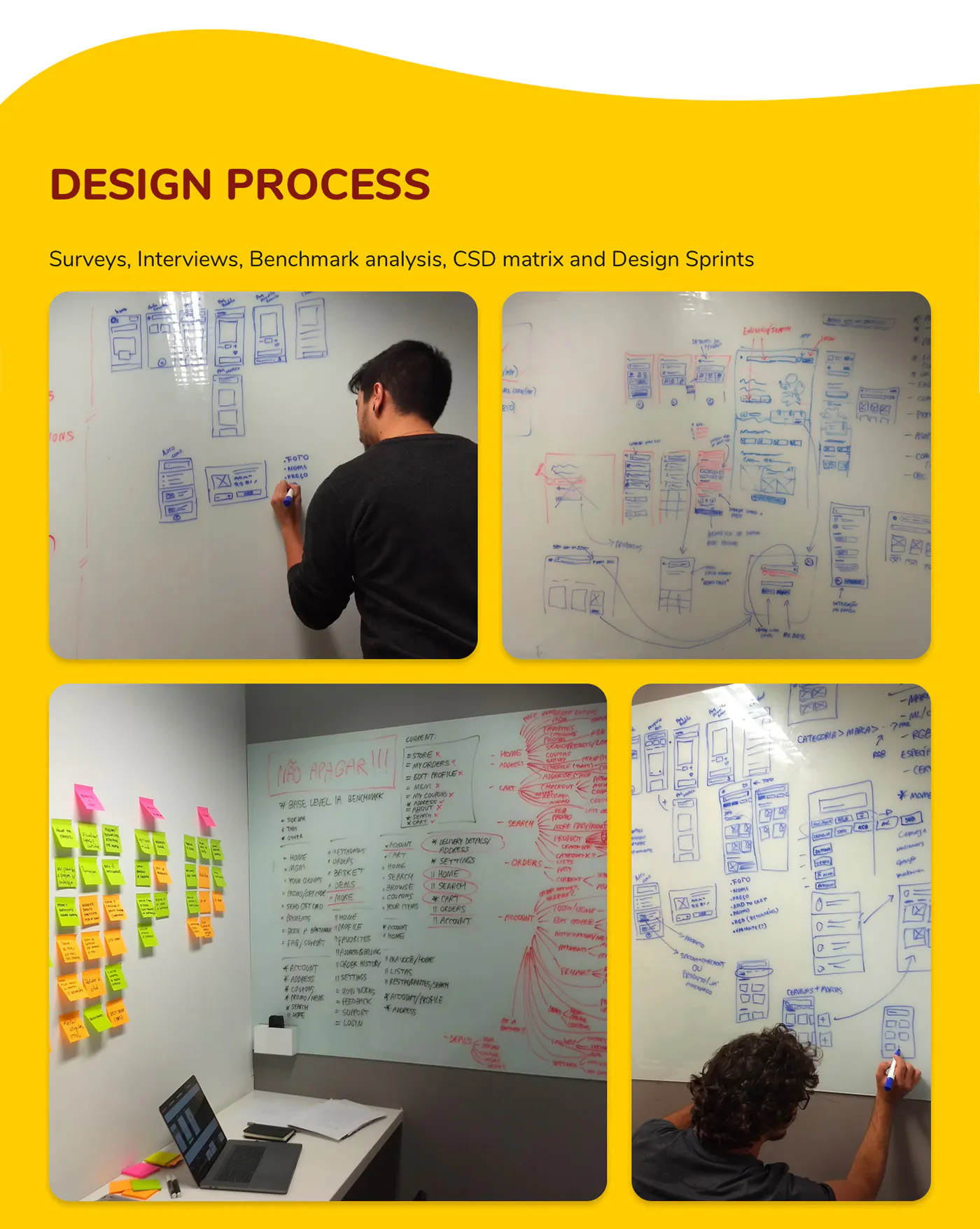
User and stakeholder interviews, competitor and data analysis, consolidated in a CSD matrix (certainties, assumptions and doubts).
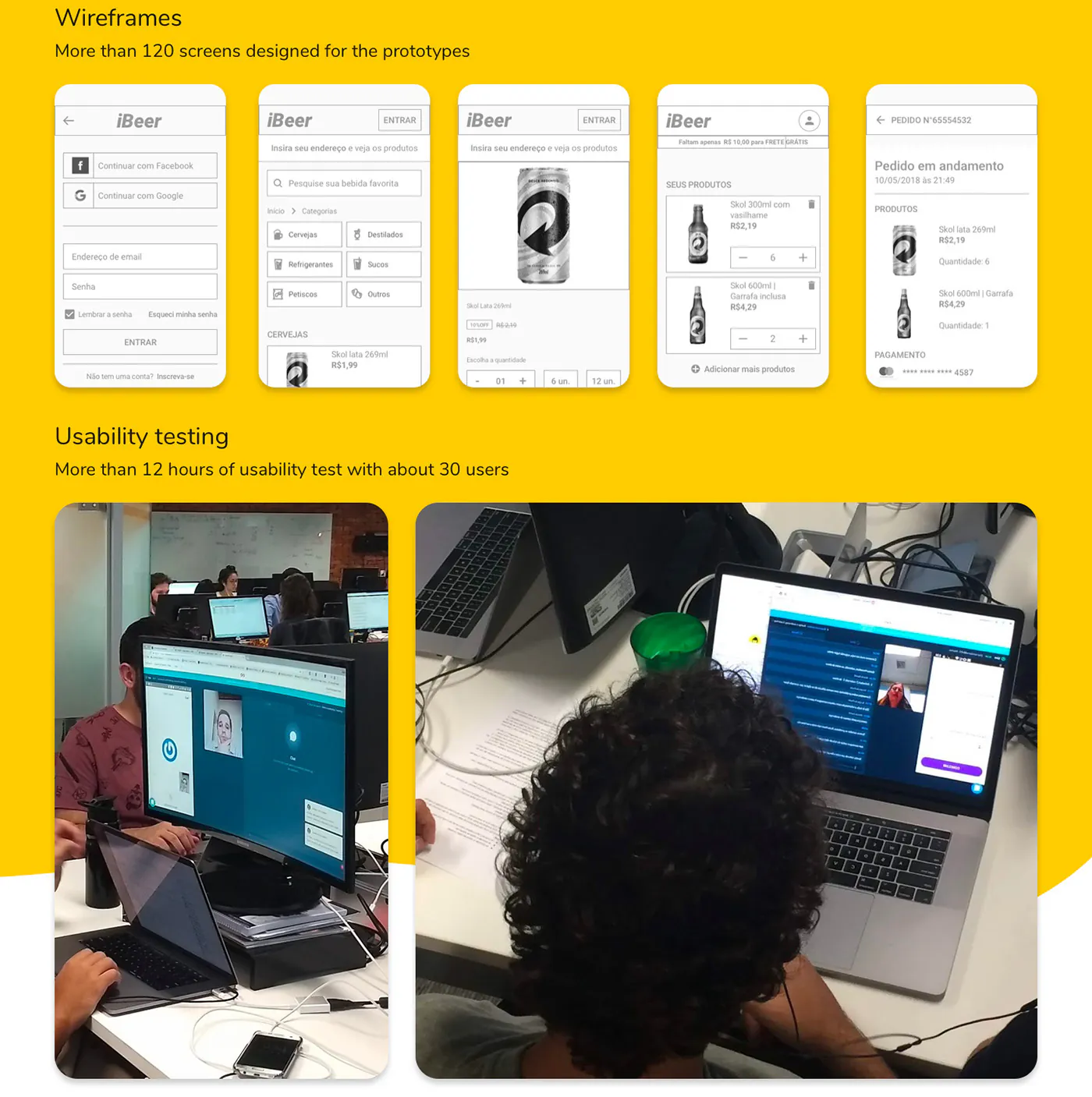
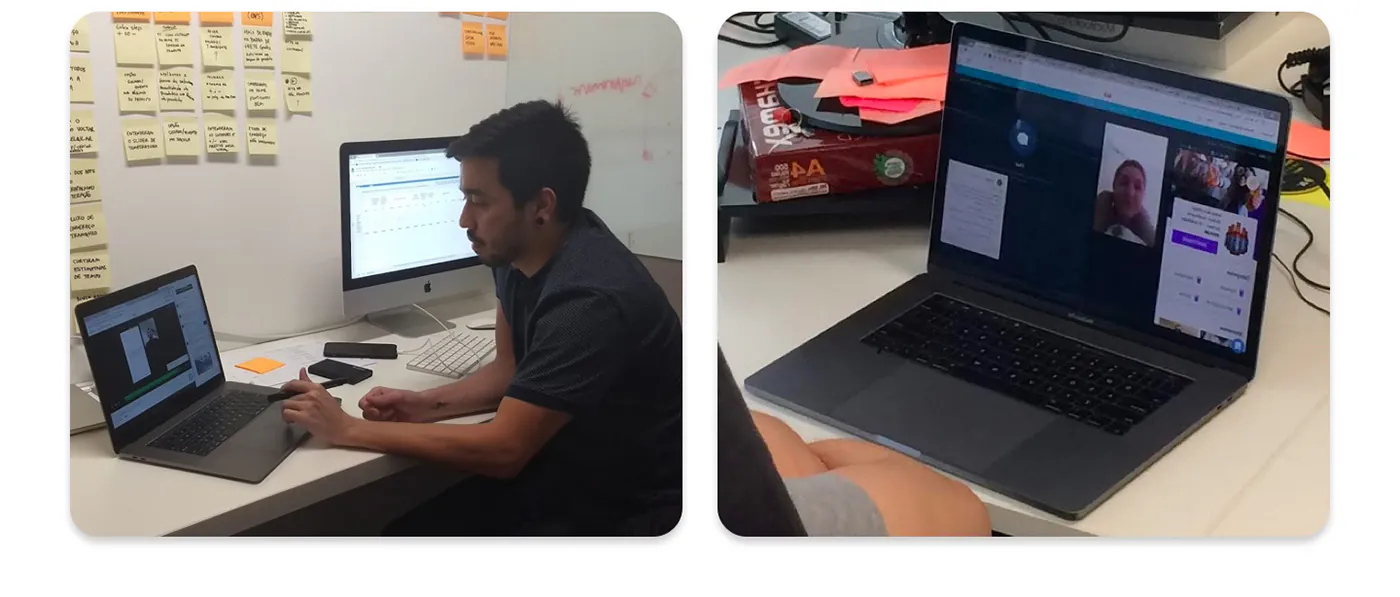
3 design sprints, 300+ screens and 12 hours of remote usability testing with 30 users.
A beta version running alongside the old app to validate the new experience.
Results
Nearly +8 pp in conversion rate.
Store ratings from 2.9 to 4.9 (Android) and 5.0 (iOS).
+USD 4 in average order value and +12 pp of users reaching the ideal product portfolio.
The app redesign that took Zé from MVP to a product ready to scale: research, CSD matrix and design sprints, more than 120 wireframed screens and 12 hours of usability testing with about 30 users.